


Number of ibises
Days of migration
KM to Spain
Human-Led Migration 2026
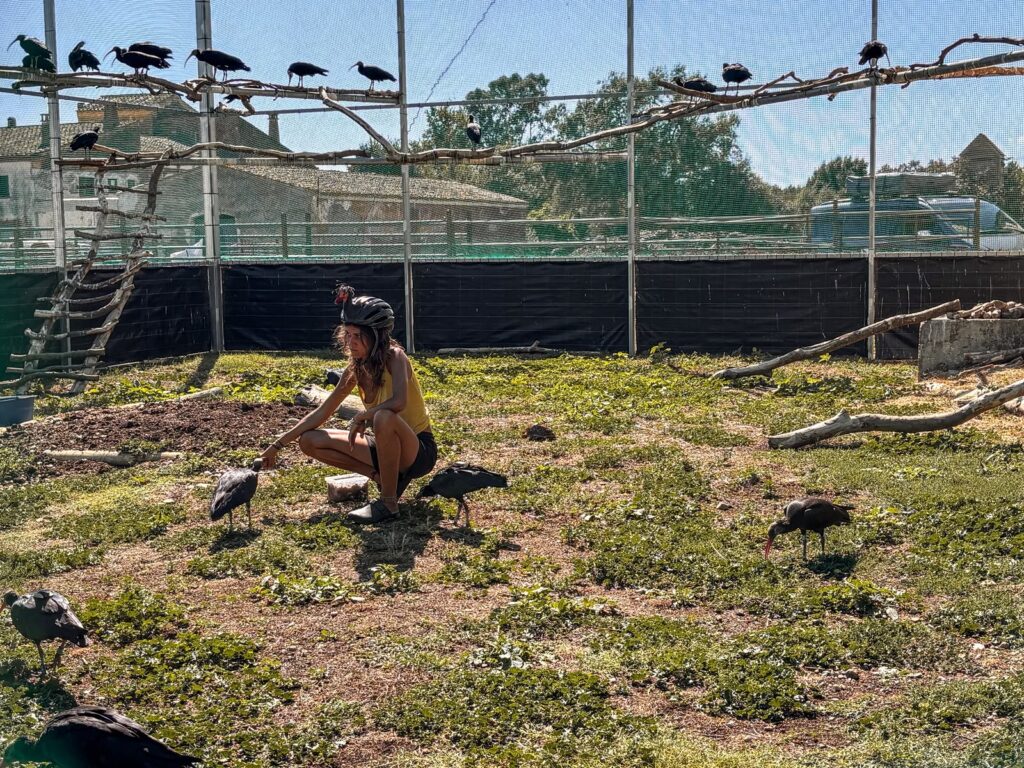
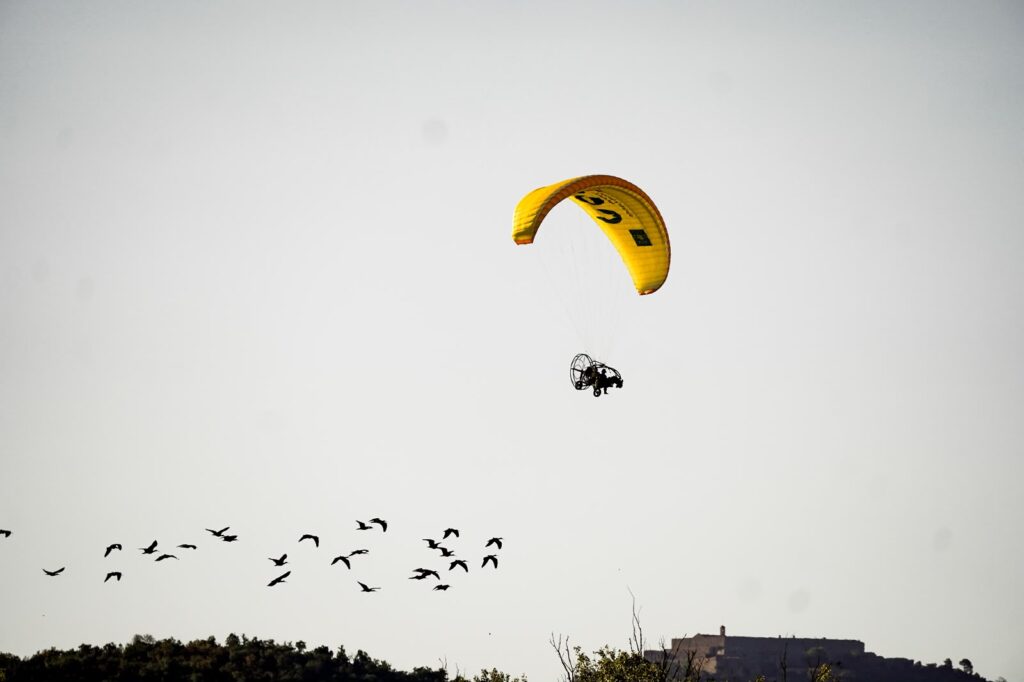
In 2026, a group of Northern Bald Ibises will again be raised by two human foster parents and accompanied on a human-led migration to a wintering area in Spain. The chicks come from the colony at Rosegg Zoo and are initially raised by their foster parents in Rosegg, without contact with other humans, and later in a specially prepared training camp. In the training camp, they learn to follow an ultralight aircraft, with one of the foster parents on board. Afterwards, they set out together with a ground team that provides logistical support for the migration, heading south. Upon arrival in the wintering area in Spain, the birds are gradually released into the wild after an acclimatization period and become part of the migrating population.

Why spain?
Global warming is also becoming a challenge for the Northern Bald Ibis. The birds of the colonies in the northern foothills of the Alps are having increasing problems flying over the Alpine barrier in autumn. A new migration corridor to Andalusia should enable them to reach a suitable wintering area without being hindered by the barrier of the Alps.
Click here for the latest pictures and information:
Current updates on the human-led migration 2026::
**Update 17.09.2026: No departure from Olocau **
Next departure: 19 or 20 September
Please note: When visiting the camp, please leave your dogs at home and avoid wearing yellow clothing.
Contact: info@waldrappteam.at
NEXT STOP: 13. POZO CANADA (ES)
Destination: Aerodrom Pozo Canada
Flight distance: 153 km
Timetable for human-led migration 2026
CW 15 - 16
Collection of approximately 32 Northern Bald Ibis chicks at Rosegg Zoo (Carinthia).
CW 15 - 20
The chicks are hand-raised for the first few weeks in Rosegg (Carinthia).
CW 20 - 33

Relocation to the training camp in Binningen (Hilzingen): habituation to themicrolight and step-by-step training of the young birds until they are eventually able to perform proper training flights.
In June and July, there will be the opportunity to visit the camp at scheduled times, observe the young northern bald ibises from a distance, and learn more about the project.
Visiting hours: from June 5, 2026
Friday to Sunday, 3:00 PM–5:00 PM
Note: Please leave your dogs at home when visiting the camp and avoid wearing yellow clothing.
Update: The visiting hours at the training camp for the 2026 season ended on 2 August.
Contact: info@waldrappteam.at
CW 33 - 40


Migration through Germany, France, and Spain:
final destination: Andalusia (ES)
CW 50
Release of the HLM 2026 birds in spain.
Migration Diary 2026
16. September, 2026
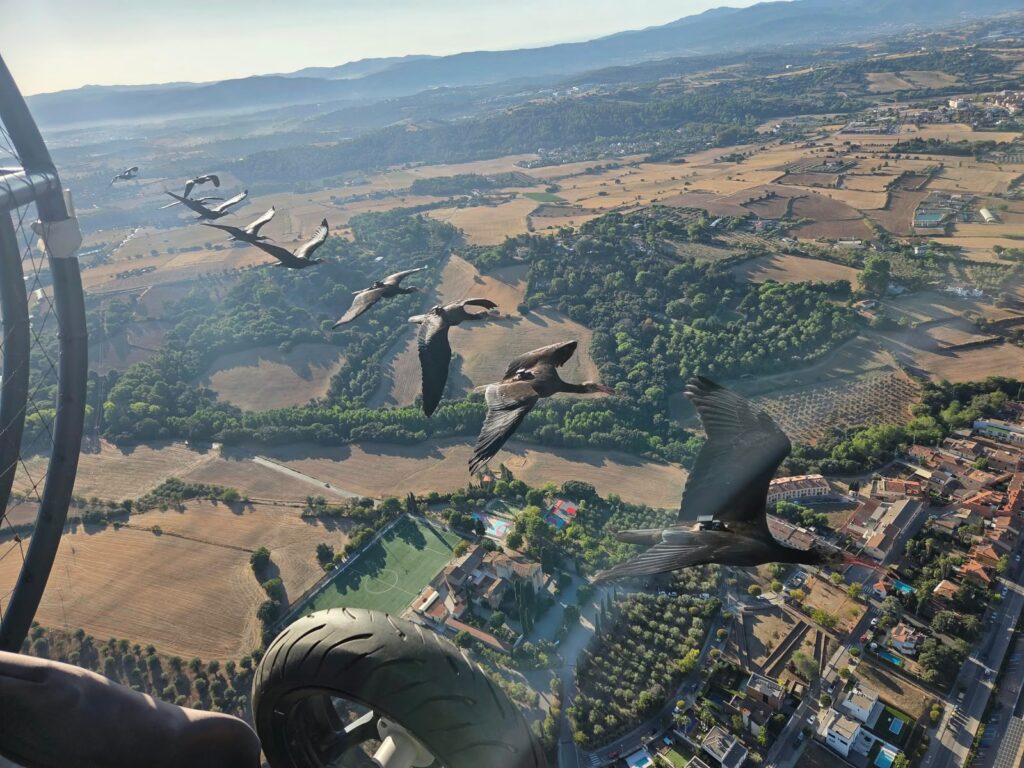
Four consecutive migration days are now behind us – a marathon of kilometers covered that is remarkable even by our standards. We have traveled more than 500 kilometers over the past four days.
On Sunday, we set off from the French side of the Pyrenees and are now already in Olocau, near Valencia. Although we had originally planned a rest day for today, the favorable weather forecast led us to make a departure from the airfield in Roquetes.
The flight here ended with a spontaneous landing near the coast due to rising winds. However, this does not take away from the success of the day: the last two stages were outstanding, particularly in terms of the birds’ flight performance.
After a somewhat chaotic start towards Ordis, all 15 Northern Bald Ibises faithfully and impressively followed the aircraft during the last two flight stages. Hardly needing to circle, they covered long distances in perfect formation, flying in a line behind the aircraft.
The birds’ motivation is also inspiring the ground team: four consecutive days means taking down the camp and aviary, covering the kilometers, and setting everything up again at a new location. As soon as the last tasks are completed, the briefing for the next stage is already underway.
Despite the exertions of the past days, there has hardly been a minute to rest so far today. Approaching storms have demanded our attention and required us to secure the camp.
Now this day is finally behind us too. After the thunderstorm, we hope to find a few quiet moments this evening to pause, take a breath, and celebrate how far we have come.
📸 E.Bajka
13. September, 2026
A first day of saying goodbye has arrived.
After a not particularly restful night, during which neither we – and surely not the birds either – got much sleep due to a deafeningly loud party on the neighboring property, we finally set off this morning on the flight across the Pyrenees.
It brought all of us to Spain, while 15 of our Northern Bald Ibises have already reached their new home in Catalonia.
Although for the Northern Bald Ibises the flight should have been just a hop of less than 40 kilometers, it turned out to be challenging. After five birds had turned back and the remaining 25 had crossed the border into Spain with the aircraft, most of the group changed their minds shortly before reaching their destination and turned back – returning to the site in France. The aircraft eventually landed with the remaining birds in Ordis, Spain.
For all of us, this is certainly not the easiest way to travel logistically. But what matters is that, through all the circling, the young birds gained valuable orientation over this important point of the Pyrenees crossing today.
Once all 30 birds had finally arrived in Spain again, an important and bittersweet moment for their foster parents had arrived: 15 of our Northern Bald Ibises reached their destination today and were handed over into the care of the Alive Foundation. There, they will become part of the colony and will eventually be released into the wild.
Our 15 birds settled into their new home remarkably well immediately after th
📸 B. Steininger
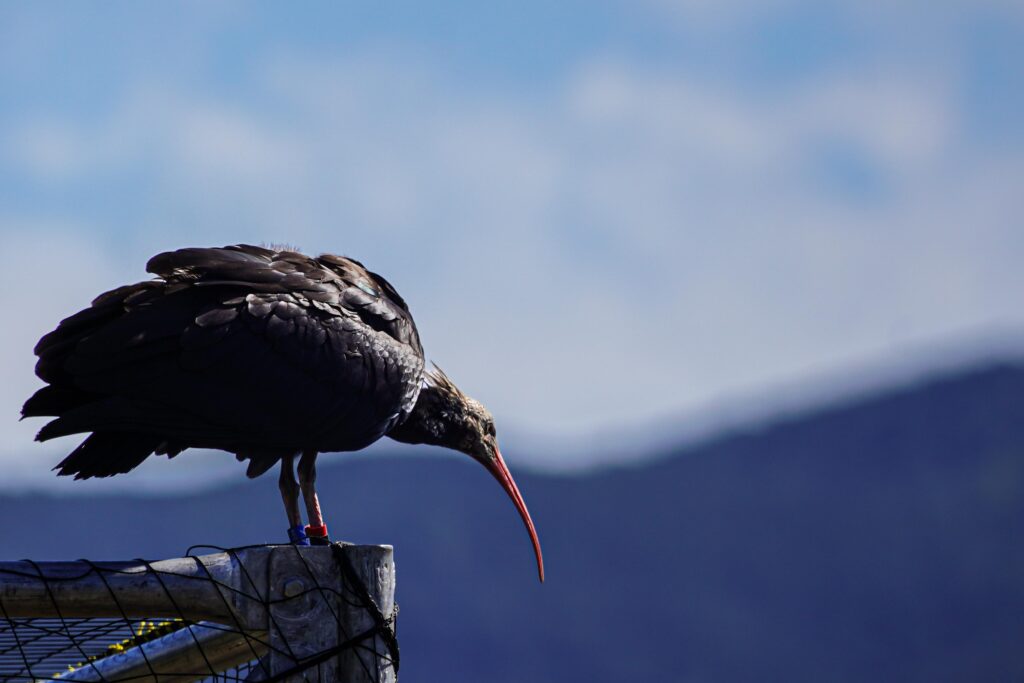
11. September, 2026
To escape the strong winds in Narbonne, we packed up our tents today, placed the birds in their transport boxes, and drove to a small airfield. It is a little closer to the Pyrenees and, most importantly, outside the area that is heavily affected by the wind. After arriving, the Northern bald ibises were already able to stretch their wings and fly a few laps around the airfield.
We will set up camp here for one night. Tomorrow, we have a short but very important flight over the Pyrenees to Ordis ahead of us, which will be crucial for the birds’ orientation.
It will be the final flight of this migration with all 30 of our young Northern bald ibises. Half of the group will remain with the Alive Foundation after we land in Catalonia and, after some time, will be released into the colony there.
📸 B. Steininger

10. September, 2026
The wind in Narbonne has already cost us valuable migration days in previous years. But this year, there is currently no sign that we will be able to make any progress anytime soon. So, we are now trying to avoid the wind and move further south, in order to reach Catalonia quickly and finally continue on to Andalusia.
We have therefore decided to transport the birds and the camp a little further south tomorrow, out of the windy area, and from there attempt the flight across the Pyrenees.
Tomorrow, we will all leave Narbonne by car and set up our camp at an airfield about an hour south of here, where we already stayed for one night last year. From there, we plan to fly to Ordis on Saturday.
📸 B. Steininger


06 September 2026
Two very exciting days lie behind us!
On Monday (07/09), we set off from Roums to Saint-Martin-de-Londres. Shortly after take-off, a group of nine birds turned back, but immediately and obediently flew back to the airfield.
The remaining Northern Bald Ibises followed the aircraft, with foster mother Fabienne on board, for 66 kilometres. However, about 25 kilometres before the destination, another five birds lost contact with the group while circling in the thermals. The flight team landed safely in Saint-Martin-de-Londres with 15 birds after almost two hours. After turning back, however, the five adventurers did not return to the camp, but instead ended up in the mountains of the Ardèche.
The “Birdcar” — the car that always follows the birds’ paths and detours — immediately set off with foster mother Eszter on board to search for them, and managed to reach one of the Northern Bald Ibises that same evening.
As bad weather was forecast for the following days, potentially grounding us for up to a week, we absolutely had to use the next day for the onward flight to Narbonne. So, that evening, we came up with an ambitious plan:
The Northern Bald Ibis search team spent the night near the missing birds’ roosting site. At first light, they found the remaining four birds and immediately set off southwards by car with them. Shortly afterwards, the flight team took off from Saint-Martin-de-Londres, knowing that the entire team was now following behind them on the ground.
And this time, the birds seemed to sense that this day really mattered: All of the Northern Bald Ibises followed the aircraft perfectly for the entire 92-kilometre flight to Narbonne, without circling even once. An amazing flight!
Shortly afterwards, the five stragglers arrived by car with their companions, closely followed by the rest of the ground team. Finally reunited, the aviary was set up in no time, and there was a huge sense of relief throughout the team.
Now, as predicted, we have to sit out a weather-related flying break.
But we have made another important step forward: 900 kilometres of our journey are already behind us, and the next flight will take us into Spain.
📸B. Steininger

06 September 2026
As the next leg to Roums would have been difficult to complete in a single flight, we decided to remain flexible. We knew that at some point the wind would force us to land. So, the goal for today’s flight was simply: fly as far towards Roums as possible.
After a short but successful flight, we landed safely and were able to complete this leg exactly as planned.
After landing, the foster parents placed all 30 birds into transport crates and drove them to Roums, located in the beautiful Ardèche region. There, we were greeted by bright sunshine and temperatures of around 36°C. Setting up the aviary in this heat had the whole team working up quite a sweat.
Luckily, the nearby river provided some much-needed cooling after this long day of migration.
📸B. Steininger


04 September 2026
Yesterday, we started our 4th stage from Lons-le-Saunier airfield, with the goal of reaching Pérouges airfield.
Right from the start, the birds showed their strong motivation to migrate: this time, not a single bird stayed behind at the airfield. All 30 Northern Bald Ibises followed the aircraft confidently and reliably.
A fantastic flight took the team towards Pérouges. Around Pougues-de-Bresse, however, many of the birds descended to low altitude near an airfield. To avoid losing the group, the flight team decided to land nearby and make a short stop.
Afterwards, the entire group set off together once again towards Pérouges. The thermals, which our birds are usually very happy to use, made the final part of the journey increasingly challenging. Shortly before reaching their destination, more than half of the birds eventually lost contact with the aircraft.
The aircraft continued on to Pérouges with the remaining birds, and shortly after landing, a few more stragglers arrived. However, 14 birds turned back and flew mostly in the direction of Lons-le-Saunier, where they were greeted by a foster mother who had also returned.
Since they only turned back shortly before Pérouges, we can say that the entire group completed this flight stage – some of them even in both directions. This means they now know the area very well for the return journey.
As a rule, our juvenile ibises reliably return to the last camp location if they lose contact with the aircraft for any reason. Sometimes, however, they take a little detour along the way – perhaps to enjoy a small snack.
Thanks to the GPS trackers, we can reliably locate and collect these little adventurers as well.
One of the birds that set off back yesterday, however, seemed unsure which camp location to consider its last one – Lons-le-Saunier or the site of our intermediate landing. Apparently undecided, it flew back and forth around the area for a while before finally settling down at a roosting site. One of its foster mothers picked it up from there early this morning.
After this exciting and eventful day, all the Northern Bald Ibises and team members are now safely in Pérouges.
Today, we are taking the day to recover and hope to embark on our next flying adventure tomorrow or the day after.
📸 P. Wimmer, B. Steininger

02 September 2026
At least we made it as far as Lons-le-Saunier today!
Unexpected headwinds slowed the flight team down a little, so the decision was made to land in Lons-le-Saunier and set up camp here.
Five birds turned back again shortly after take-off, while the rest of the group followed reliably and with renewed motivation. In contrast to yesterday’s attempt, the motivation of the Northern bald ibises seemed completely different today.
The group of returning birds also does not fully correspond to the group that was transported to Hütten-Hotzenwald. Based on our experience, Northern bald ibises are able to compensate well for individual stages of their route on which they were transported.
If the weather permits, we will continue flying to Pérouges as early as tomorrow.
📸 B. Steininger

01 September 2026
After a long period of bad weather, we wanted to set off on a flight to Pérouges this morning.
We are back in – or rather, still in – Besançon.
Today, our Northern bald ibises did not want to leave Besançon. After a short flight during which they initially followed the aircraft reliably, most of the group turned back.
This behaviour is not entirely new to us. Anyone who has been following our migrations knows that the birds sometimes refuse to fly. Tomorrow, we will be motivated to make another attempt.
The good news: The weather finally seems to be settling down, and increasingly stable flying conditions are emerging – providing the best possible conditions for another attempt.
📸 B. Steininger
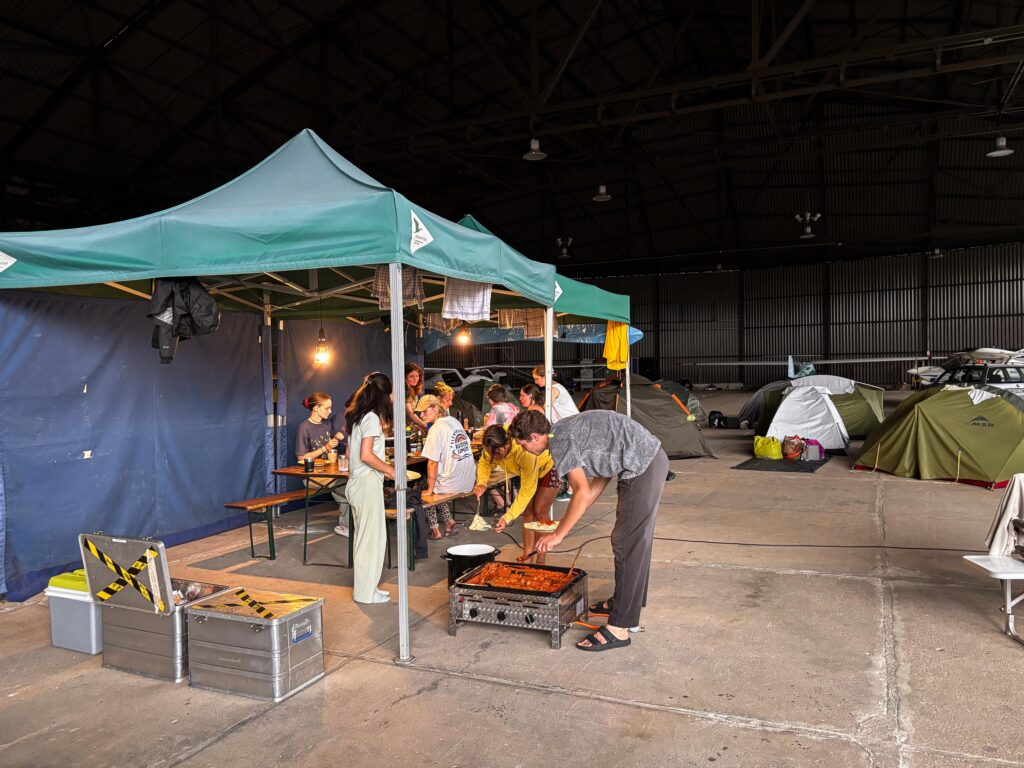
Last night, severe storms swept across the Besançon area. One of them hit us with considerable force, while fortunately the other thunderstorms that continued to develop into the early hours of the morning only grazed us and largely spared us.
Thankfully, we were able to evacuate the camp to the hangar at the airfield in time. The birds remained safe in the aviary, which is designed to withstand even very strong winds.
We are relieved and grateful that all the birds and people here are safe and well.
Unfortunately, the strong winds are expected to continue at least until tomorrow, preventing us from continuing our journey from Besançon for the time being.
📸 B. Steininger
August 28, 2026
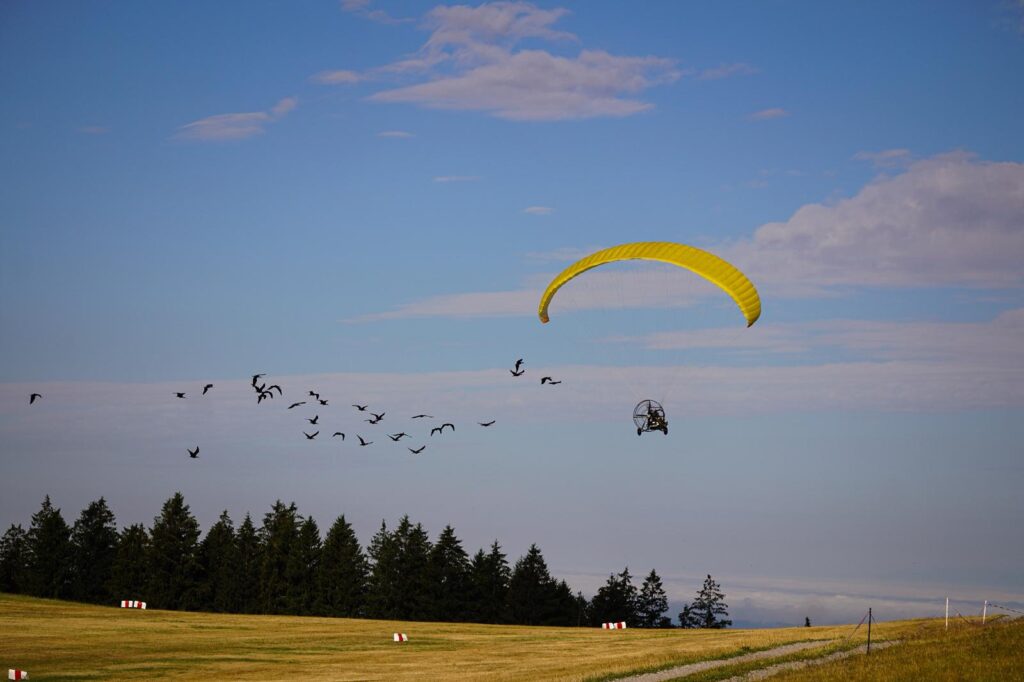
After the fog had cleared, we were able to complete our second flight leg yesterday morning, from Hütten-Hotzenwald to Besançon. It was a long and demanding flight that took the flight team to France: 4 hours and 33 minutes of flying time and 203 km.
The group of birds flew reliably, but every now and then they showed their preference for thermal circling and gliding flights – a challenge for foster mother Fabienne in the aircraft, who had to keep an eye on all her charges. Shortly after takeoff from Hütten-Hotzenwald, seven birds broke away from the group and turned back. They gradually arrived at our camp, which had already been dismantled. There, foster mother Eszter was already waiting for them. This is not the first time that birds have turned back for no apparent reason, and by now we are well prepared for such situations.
Nevertheless, one of the young birds took its time returning to the group, meaning that the transport carrying the seven stragglers did not finally arrive in France until shortly before midnight.
Now, however, everyone is back together and waiting patiently in Besançon for suitable flying weather so that the journey can continue.
📸 B. Steininger
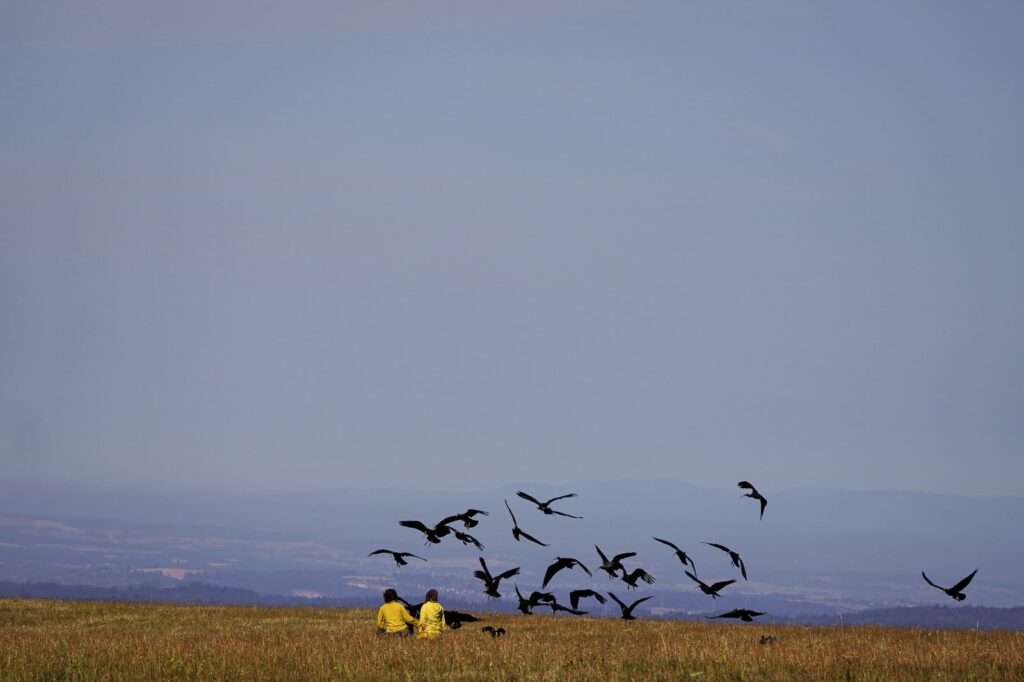
August 23 , 2026
For almost a week now, alternating rain and wind have kept us grounded. But team members with experience in human-led migration know: patience is the most important virtue here.
And the wait has paid off – we made it to our destination! This time, our stopover was Hütten-Hotzenwald airfield. And what a spectacularly fast flight it was: a flight time of just 1:09 hours, an average speed of 61 km/h and a top speed of 75 km/h.
All thanks to the favourable tailwind we had been waiting for for almost a week. All 30 birds completed their first migration leg with flying colours.
Tomorrow, we plan to continue on to France. This time, we have a significantly longer stretch ahead of us: 170 km to Besançon.
But after this promising start to the migration, we are confident that this will be no problem for either the team or the birds.
 B. Steininger
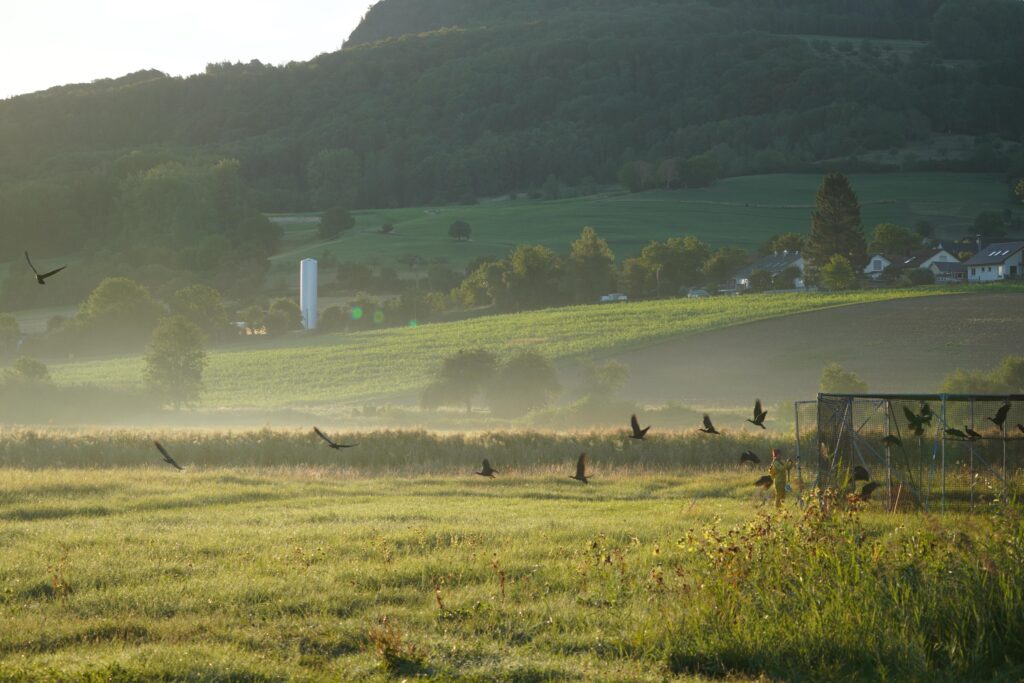
August 19, 2026
After two days during which the weather conditions made a takeoff impossible, a small window of opportunity opened up this morning. Since the weather forecast for the coming days is also rather uncertain, we decided to give it a try and take off as early as possible.
For a while, everything seemed perfect: We took off at 07:00. The birds immediately followed the aircraft, and the flying conditions were also good at the beginning. However, we had to cross a small mountain pass, and the flight team increasingly had to contend with headwinds. After about 10 km, just before reaching the pass, the headwind slowed us down to a ground speed of only around 10 km/h. This was already critical, so it was time to turn back to Binningen.
On the way back, we now had a tailwind, which accelerated us to a maximum speed of 83 km/h.
This situation did not come entirely unexpectedly, as wind had been forecast. However, based on the forecast, we felt it was worth giving it a try.
The next takeoff is expected to be on Saturday, as even stronger winds are forecast for tomorrow and rain is highly likely on Friday. The current probability of flying is therefore 0% for tomorrow, Thursday; 20% for Friday; and 70% for Saturday.
📷 B. Steininger
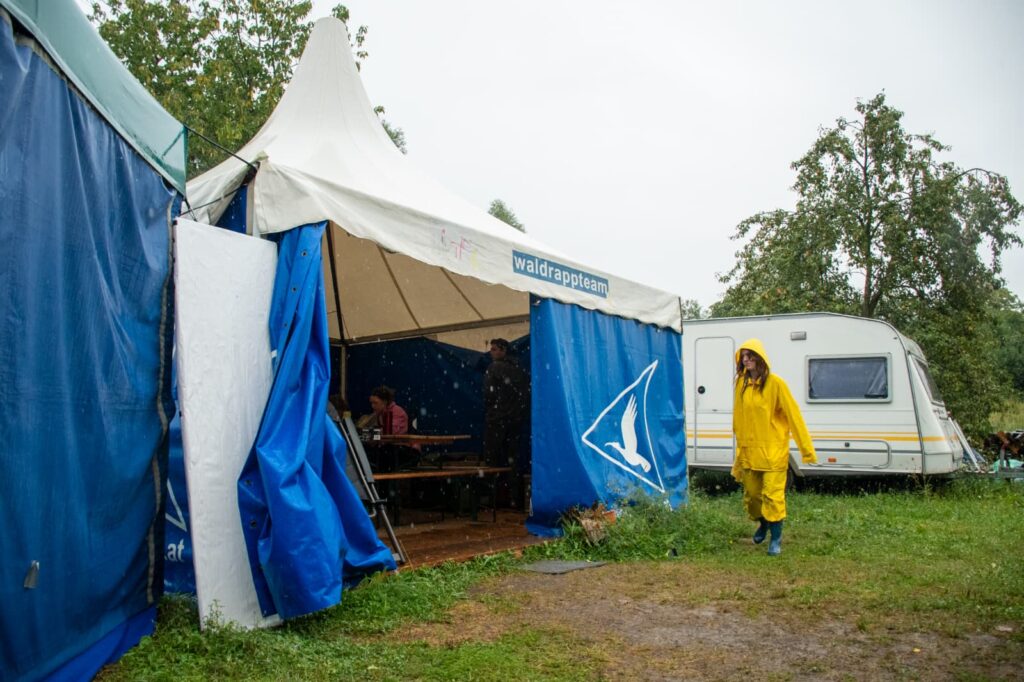
18 August 2026
The birds are ready, the whole team has gathered, and the camp is ready to move. And then, on the exact day we planned to take off, rain arrives for the first time in weeks.
Yesterday, after taking a close look at the forecast, we postponed our migration start, which had been scheduled for Monday, 17 August. Some things simply cannot be influenced, even with the best preparations.
But our spirits are still high, and the migration mood has only just begun! The team is using the extra time to get to know each other, familiarize themselves with the processes, and make some final preparations.
We are closely monitoring the forecast for tomorrow and hope to finally get started then. For now, the chances of a migration start are around 80%.
📷 P.Wimmer
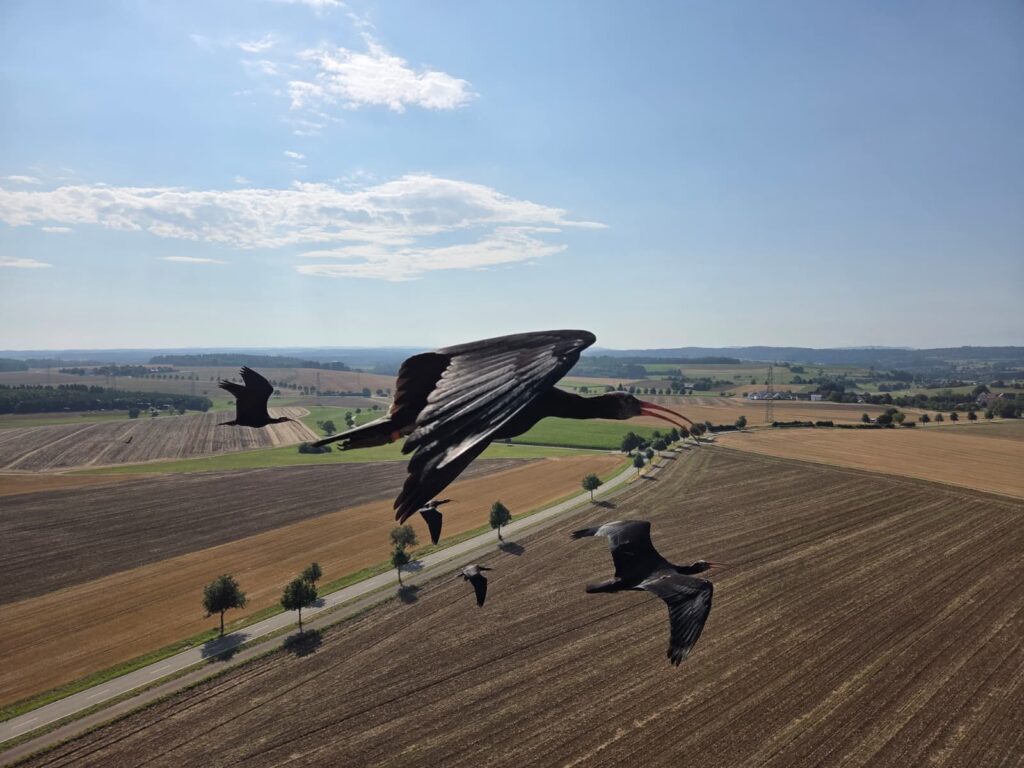
10 August 2026
We are ready to go! The last training flights with our 30 northern bald ibises have shown that the birds are ready for migration! They reliably fly alongside their foster mother in the air and have no fear of the aircraft whatsoever. For our team, this means: We’re ready for take-off!
We are planning to depart from Binningen on 17 August. The first stage will take us around 70 kilometres to Hütten Hotzenwald. This will also be the only leg of the journey in Germany. The next flight will take us on to France.
This year, too, the flight team will be accompanied by a highly motivated ground crew, fully equipped and prepared for every eventuality. We are excited and heading into the final week before departure with great motivation.
📷 E. Bajka
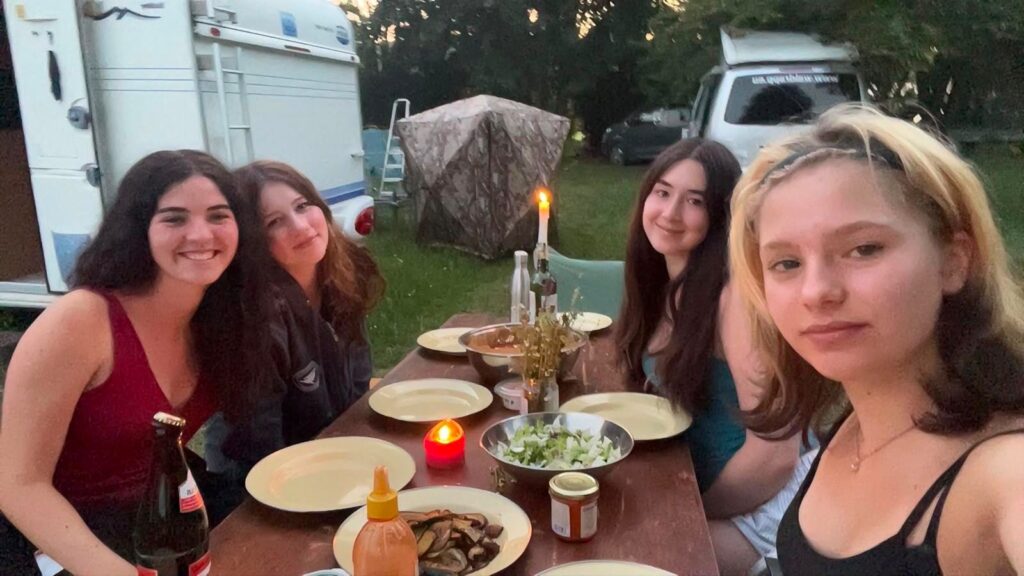
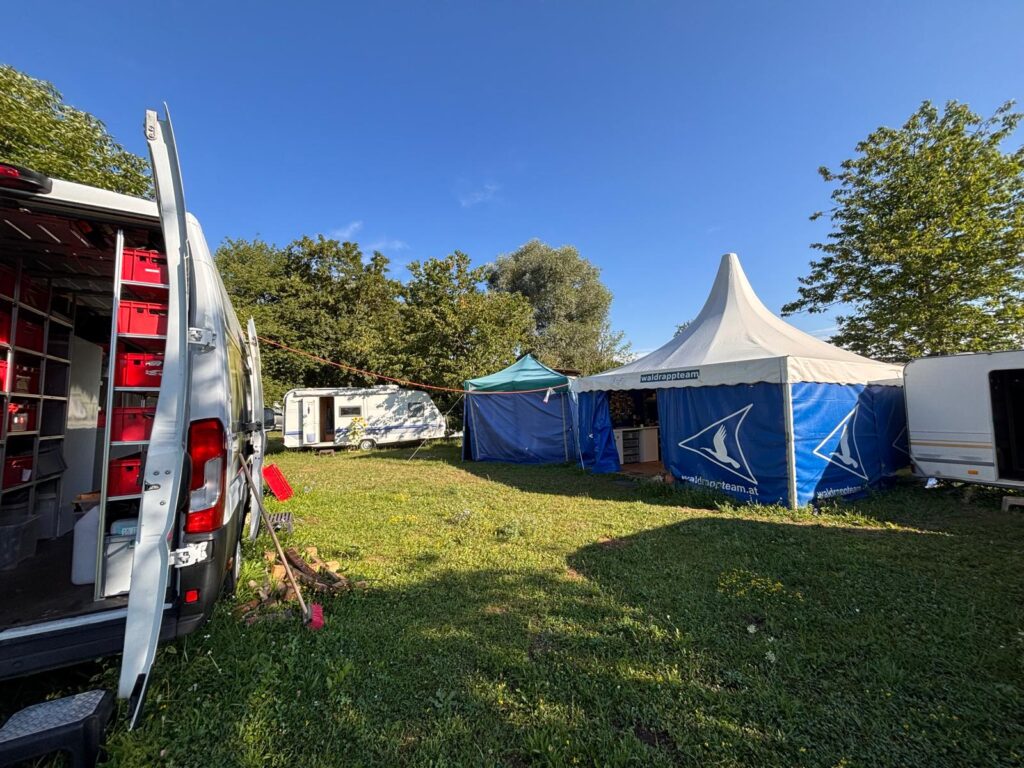
3 August 2026
Today’s diary entry was written by our interns Naira, Madeleine, Bori and Amelie. They are completing a four-week internship as part of our project, funded by the Austrian Forschungsförderungsgesellschaft (FFG).
For the past two weeks, we have been part of the team, supporting the project. We all share one common goal: to successfully complete the Northern Bald Ibis migration to Spain.
Of course, the foster mothers play an indispensable role as the birds’ primary caregivers, as do the project’s founder and pilot, who leads the migration, and our sponsors, whose financial support makes the project possible. However, none of this important work could happen without many helping hands.
This is where we come in – Naira Gruber, Madeleine Cashen, Bori Nagy-Pataky and Amelie Titelbach. The four of us take on a range of tasks that mostly happen behind the scenes but are essential to keeping everything running smoothly.
One of our main responsibilities is preparing food for the birds. This includes mixing the meat as well as cleaning and feeding the mealworms. We also help keep the camp running by cooking, carrying out a variety of cleaning tasks, and making everyday life easier so that the scientists can focus as much as possible on the project itself.
In addition, we assist with the training sessions, whether at the airfield, where we keep an eye on air traffic, or in the escort car, from which we help find the quickest route while following the aircraft. We are also responsible for digitising the data collected throughout the entire process.
It is honestly incredible how much we have learned in just these few days—not only about the science and the work behind such an important conservation project, but also about life at a campsite.
None of this would be possible without our camp leader, Amelie Muntschick. She makes sure everything runs smoothly, always keeps track of what’s going on, and supports us wherever she can. In such a short time, we have already become a close-knit community, and that is exactly what makes working here so special.
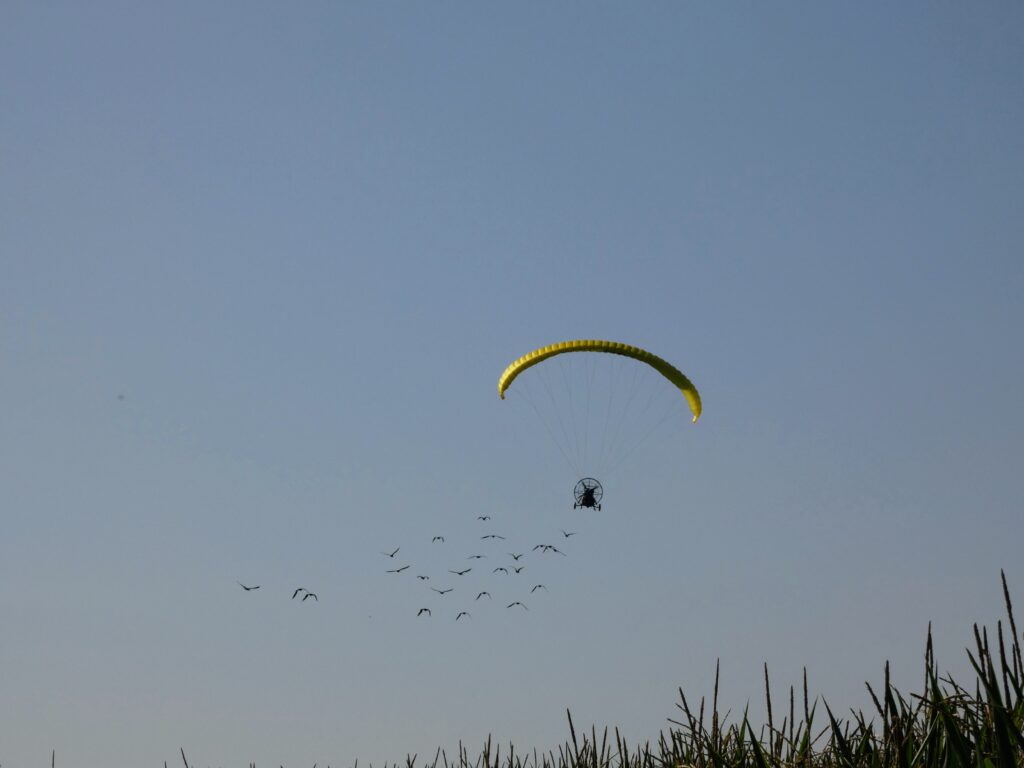
30 July 2026
Flight training is now well advanced, with the birds currently completing flights over distances of more than 20 kilometres. They reliably follow the aircraft and are flying increasingly close to it. In addition, they are showing the first signs of formation flying and are making increasingly efficient use of thermal updrafts whenever conditions are favourable.
Further training flights to various airfields in the surrounding area are scheduled over the next two days. The main objectives are to further improve coordination between the flight team and the birds, and to provide the young ibises with additional experience under different flying conditions and flight techniques.
A small setback amid these encouraging training successes was the leg fracture of one juvenile bird during a training flight. Fortunately, the injured bird was able to receive prompt treatment. The patient is currently being cared for by a project staff member and will be released once it has fully recovered. Unfortunately, it will not be able to take part in the flight training and, consequently, in the human-led migration.
The training camp at Binningen airfield can still be visited until and including 2 August during visiting hours from Friday to Sunday, between 3:00 pm and 5:00 pm.
A. Schmalstieg
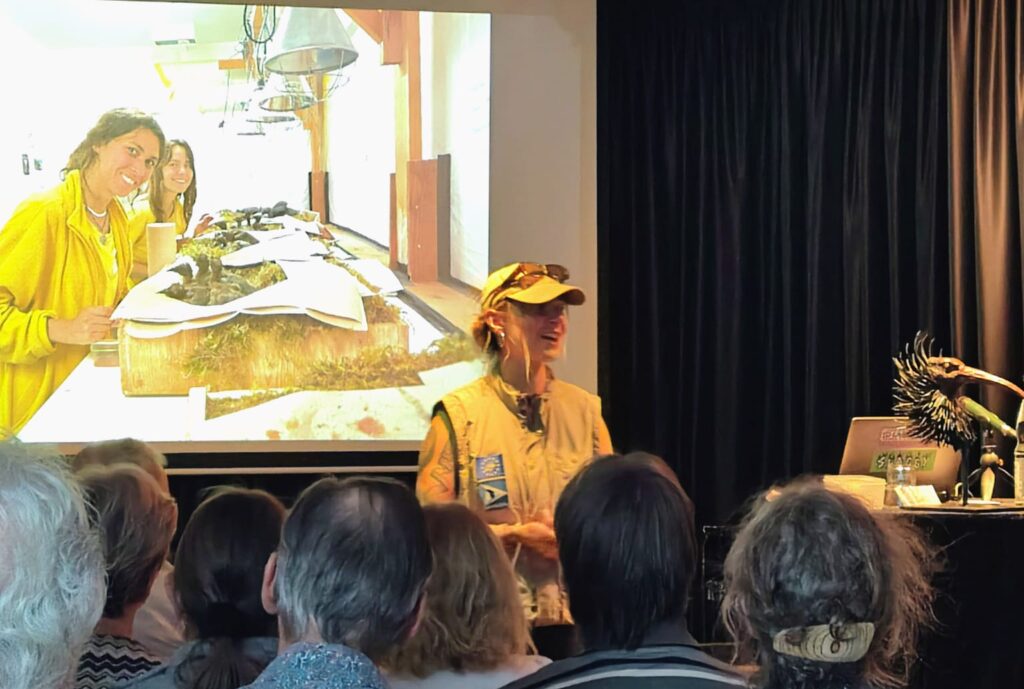
July 23, 2026
Public outreach is also an important part of our project and the hand-rearing program. Wherever we set up our hand-rearing camp, it is important to us to involve local communities and provide information about the reintroduction of the Northern Bald Ibis.
We are delighted that public interest in the region has been so strong. Therefore, our camp manager, Amelie Muntschick, kindly agreed to give a presentation at the Impulshaus Engen about the 2026 hand-rearing season. Around 50 interested visitors attended the event. Following Amelie’s engaging presentation, the audience’s numerous questions were answered in detail with the support of Anne-Gabriela Schmalstieg and Rudi Beck.
We are very pleased about the great interest in our project, which is also reflected in the high number of visitors to the camp. The hand-rearing camp can still be visited during opening hours until and including the coming weekend (July 31–August 2). Further information on visiting hours can be found at the top of this page.
A. Schmalstieg
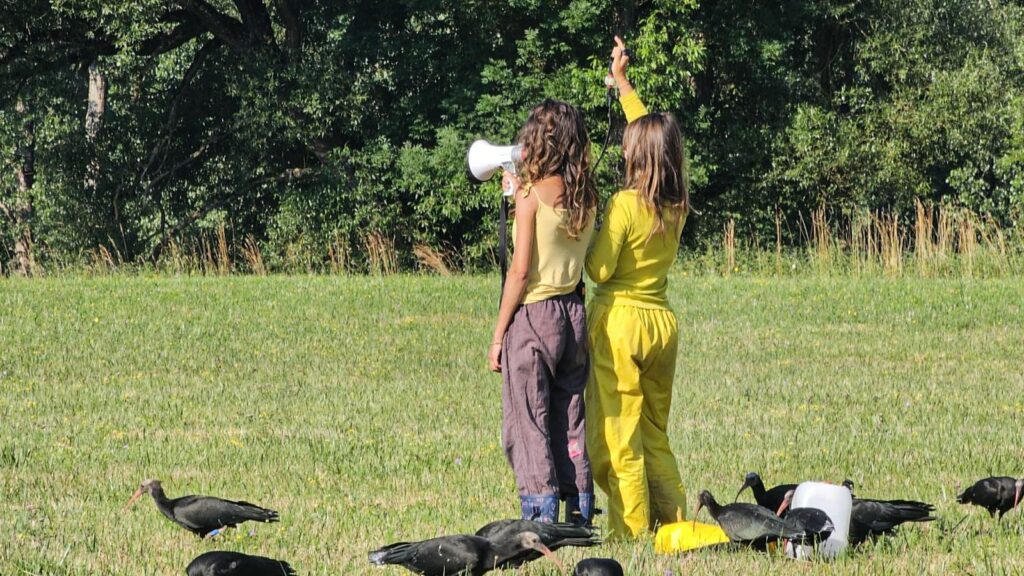
2 July 2026
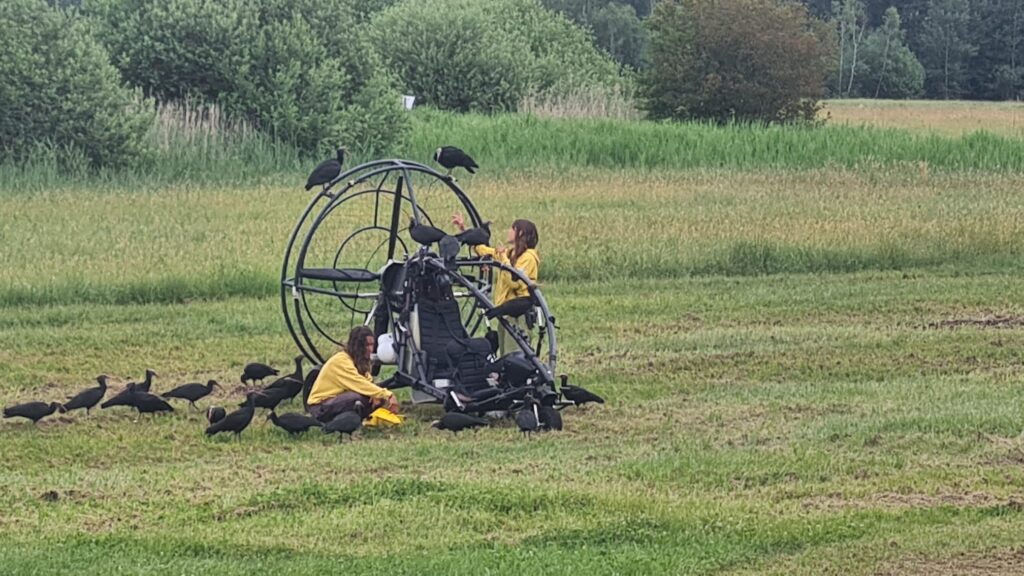
A lot has happened at the training camp at Binningen/Hilzingen airfield since the first free flight. Several times a week, the young Northern Bald Ibises are trained to gradually become familiar with the microlight aircraft and learn to follow it confidently in flight.
After foster mothers Eszter and Fabienne first introduced their birds to the aircraft and its large parachute on the ground, training has now progressed to the next stage. Today, the team successfully completed its first landing outside the airfield grounds. Both the foster mothers and the young ibises are mastering these new challenges with great enthusiasm and motivation.
All training sessions follow a training concept that was revised for this year’s season. The goal is clear: by the start of the human-led migration in mid-August, the birds should be sufficiently trained to reliably follow their foster mother in the microlight aircraft through the air.
📷 J. Fritz
15 June 2026
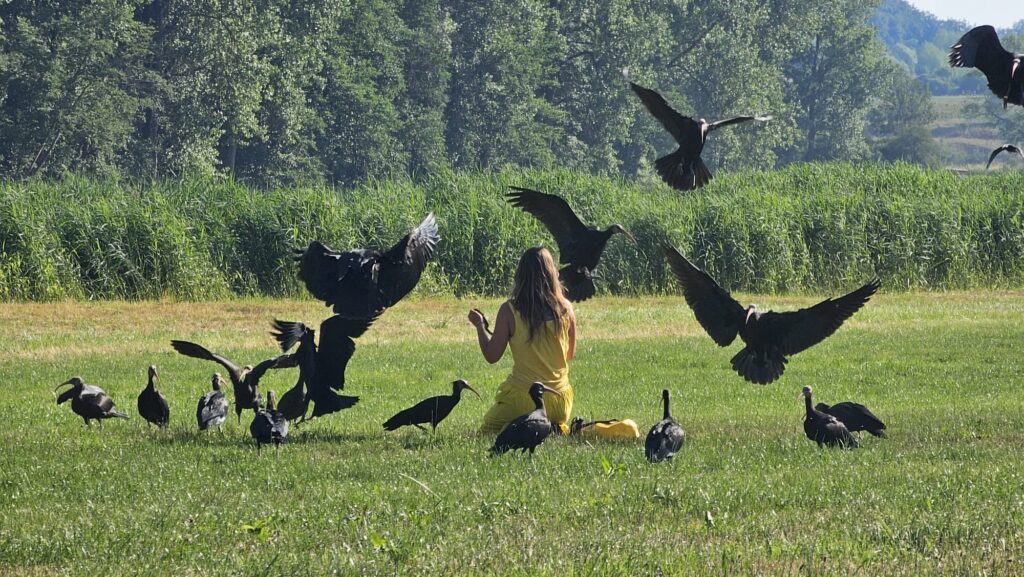
Today marked the first free flight of the young Northern Bald Ibises in Binningen. This is always one of the most exciting and memorable days of the season: for the very first time, the foster parents open the aviary doors, and the young birds take their first wingbeats under the open sky. As they explore the surroundings of the camp, they also gain their very first experiences of flying freely.
This day is an important milestone, as it shows whether the foster parents’ intensive efforts have paid off and whether the young birds have developed a strong bond with them. Only if this relationship of trust has been successfully established will the ibises reliably return to their human foster parents after their first flights.For the young birds, however, there is still a great deal to learn. They must learn how to orient themselves in the open air, master safe landings, and find their way back to the familiar surroundings of the camp. It is therefore not unusual for individual birds to set off on longer exploratory flights or to take some time before finding their way home.
On the morning of 15 June, this year’s group enthusiastically took to the bright blue sky for their first flights. As expected, the flock’s flight formation was still rather disorganized and chaotic at first. With increasing flight experience, however, their movements will soon become much more coordinated, graceful, and elegant.
Most importantly, the majority of the young ibises returned exactly as hoped to their foster mothers, Eszter and Fabienne. Three of their protégés initially decided to embark on a small adventure. Two of them returned to the camp later that same evening, while the third missing bird safely found its way back the following day, where it was eagerly awaited.
Following this successful first free flight, the next stage of training can now begin. Step by step, the young Northern Bald Ibises will be introduced to the microlight aircraft and all the procedures involved in flying together, preparing them for the remarkable migration journey that lies ahead.
May 19, 2026
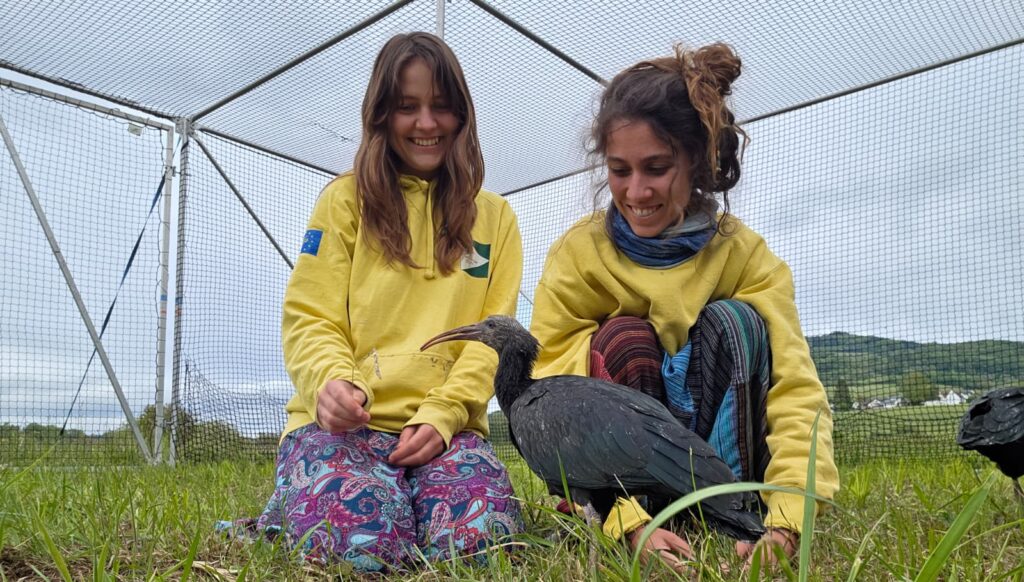
After a wet and frosty first week at the camp, the sun is finally beginning to appear more frequently over our camp at Binningen airfield. Both people and birds seem to have settled in well: while the camp is being fully set up and the field kitchen officially inaugurated, the first five birds have already fledged.
One after another, they made their first wingbeats from the entrance of the rearing trailer out into the aviary — closely watched by their younger siblings with curious and perhaps slightly jealous looks. Over the course of the coming week, all of the young Northern Bald Ibises will gradually take the leap into the aviary.
With that, life for both the birds and their foster mothers is increasingly moving outdoors: out of the rearing trailer and into the lush green meadow beneath what we hope will soon be permanently blue skies.
📷 The photo shows Kobold during his first excursion into the aviary. Not only the two foster mothers, but Kobold himself also seems visibly proud of this achievement.
May 14, 2026
Eagerly testing their wings, the young Northern Bald Ibises are ready to leave the nest, and with it, the hand raising container in Rosegg. We truly enjoyed our time in Rosegg and would like to sincerely thank Tierpark Rosegg for all the help and support throughout the past weeks.
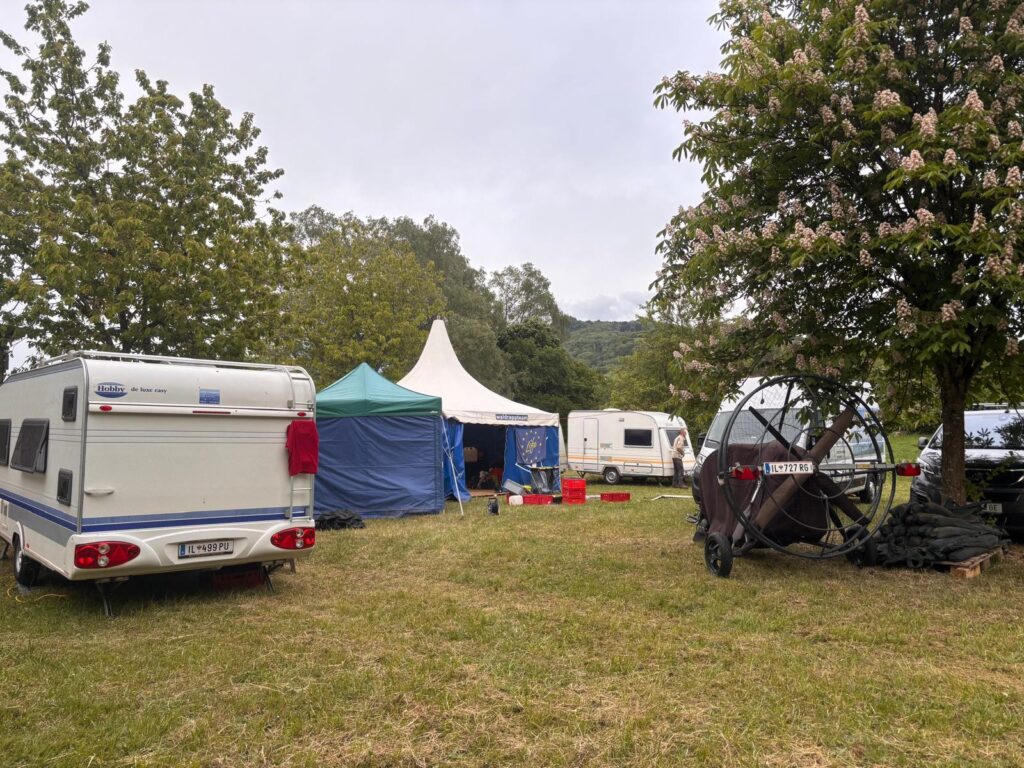
The training camp is always located close to a breeding colony, as this is where the birds will later return from their wintering grounds once they reach sexual maturity. This year, the camp is located near Lake Constance, allowing the birds of HLM 2026 to later integrate into the Überlingen colony.
Although we originally planned to establish the camp at the Riedlingen airfield, we unfortunately had to cancel those plans at the very last minute due to spatial limitations. We are therefore even more grateful that the Binningen airfield, where the hand raising team already stayed in 2023, offered to host us again this year.
After part of the team, together with several helpers, set up the camp in Binningen within a very short time, the birds could be transferred there on Thursday afternoon. Following a long journey, they arrived safely in Binningen during the night and moved into their brand new hand raising trailer.
All young ibises handled the trip very well and are already curiously exploring their new surroundings, especially the opening leading into their aviary. In just a few days, the first birds will dare the leap into the unknown and fly out into the aviary.
📷 B. Steininger
May 6, 2026
Hard to believe, but our time at Tierpark Rosegg is already coming to an end.
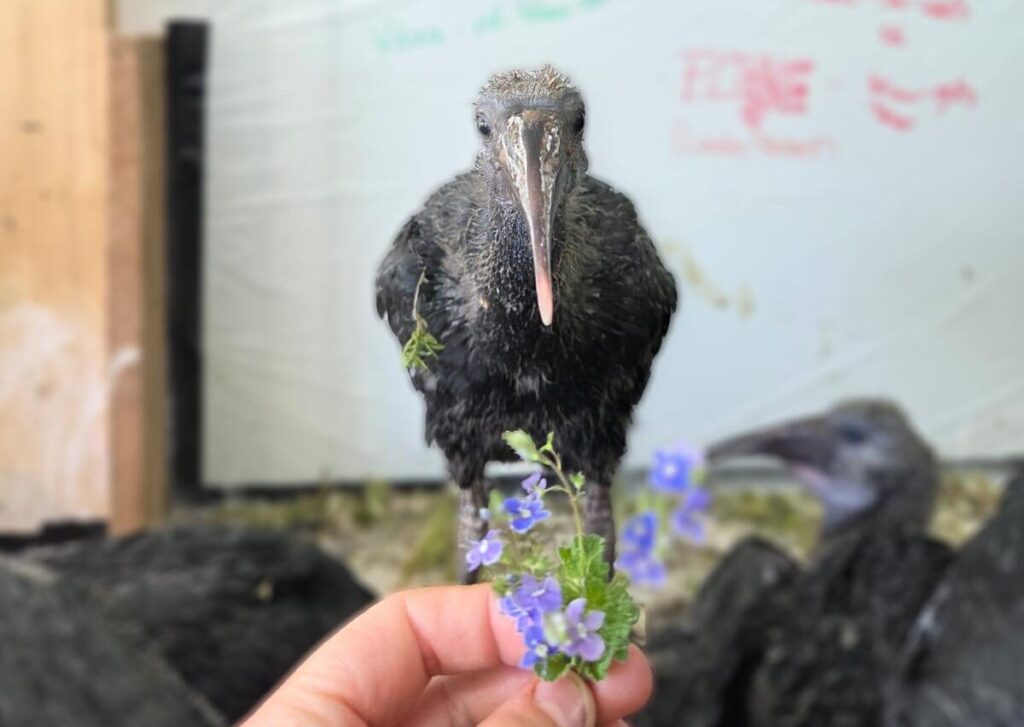
Most of our chicks now weigh over one kilogram. There’s a lot going on in the had-raising-container: the chicks are busily moving back and forth between the nests, and the larger ones are eagerly testing their now well-feathered wings. A clear sign that the container will soon be too small for this lively bunch.
At the beginning of next week, we will therefore move to our training camp in southern Germany. There, the Northern Bald Ibises will be housed in a brand-new rearing trailer connected to a spacious aviary. Once they are around 40 days old, they will be able to attempt their first real wingbeats.
The foster mothers and the rest of the team will live and work in the field camp until August. We are very much looking forward to this new phase of the rearing season, even though we will certainly miss our supporters here in Rosegg and the mountains.
📷 E. Bajka
April 20, 2026
Our family is complete!
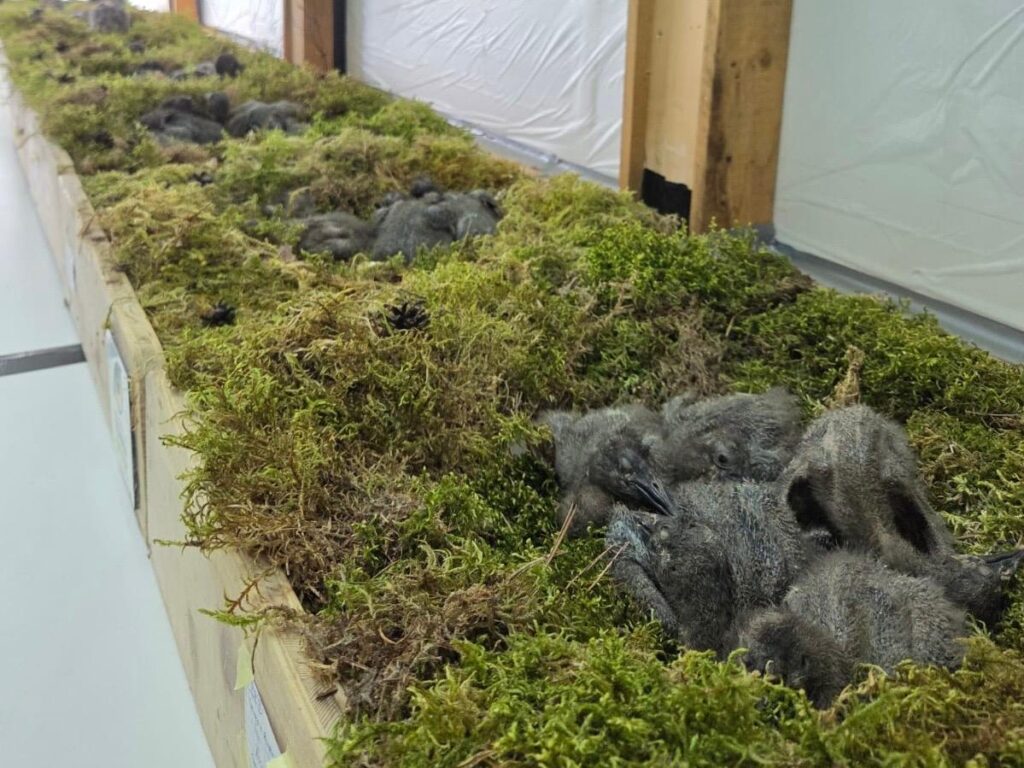
After the fourth and final chick collection, 32 Northern Bald Ibis chicks are now sitting in eight nests in the rearing container in Rosegg. The two foster mothers are now busy around the clock feeding, caring for, and keeping the lively flock in good spirits.
The age difference between the youngest and oldest chicks is no more than 14 days. At the moment, the developmental differences are still very noticeable: our oldest chick is now 20 days old. The larger chicks in the group have already started climbing from one nest to another.
A bustling group of Northern Bald Ibises, fully devoted to their current main task: eating, growing, and thriving.
April 8, 2026
After extensive planning and dedicated preparations, the time has finally come: the 2026 hand-rearing season can begin!
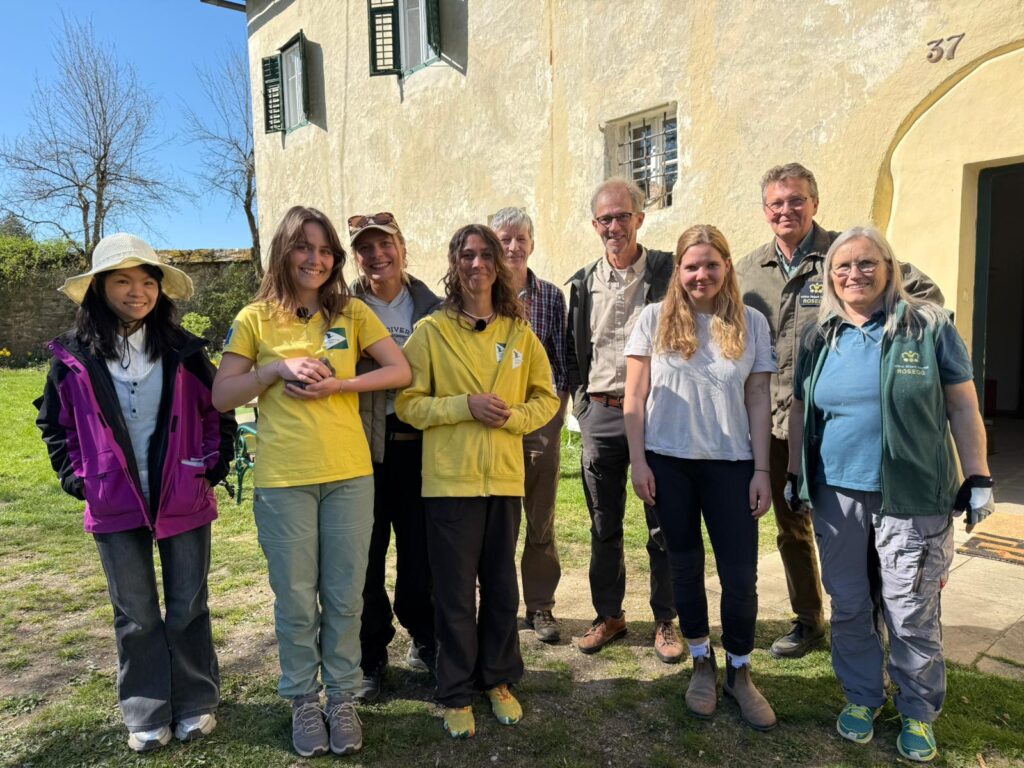
For Fabienne and Eszter, this is their first season in the role of foster mothers, and the excitement is accordingly high as six chicks from the colony at Tierpark Rosegg are placed in their care. Initially supported by Barbara, a former foster mother, they quickly learn how to properly care for their chicks.
The 2026 hand-rearing team also includes Amelie, who is responsible for camp management and, in a way, for supporting the foster mothers, as well as Yun, a Chinese PhD student who will collect data this season and support the core team.
A strong, motivated team that is starting this adventure full of enthusiasm and anticipation.
April 14, 2026
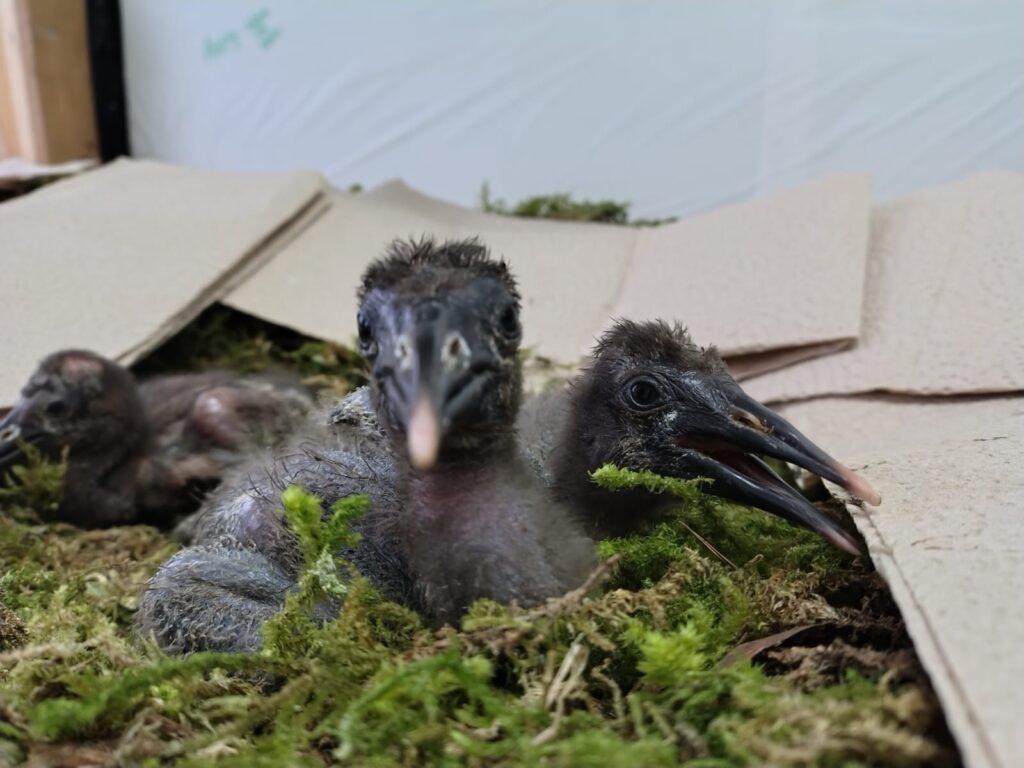
Our bird group is growing and thriving! By now, the two foster mothers have 22 beaks to feed – and a few more are yet to come.
We take over the chicks for hand-raising at an age of three to eight days. Especially during the first weeks after hatching, the Northern Bald Ibises grow rapidly and steadily gain weight. In the container, the chicks spend their days in a rhythm of feeding, sleeping, and cuddling with their foster parents.